The Iwo Jima Memorial (or it's official name - The US Marine Corps War Memorial), is one of the most impressive war memorials in the Washington DC area. The memorial itself is based on a famous photograph, of US soldiers raising the US flag on top of Mount Suribachi, in the island of Iwo Jima, during World War 2. This movie, directed by Clint Eastwood and produced by Steven Spielberg, recounts the raising of the flag, but instead of focusing on the war itself (like Saving Private Ryan for example), it talks about the how the photograph was used as a publicity machine to generate support (and money) for the war.
It is amazing how lies are created, and the men are almost forced to parade these lies. It is an anti war movie like none before ... and challenges the very notion of heroism and hero worship. In the times of Jacob Zuma, Robert Mugabe and Iraq, the movie raises some very relevant questions for right now.
20 December 2006


16 December 2006
Cell C - Sound of the City
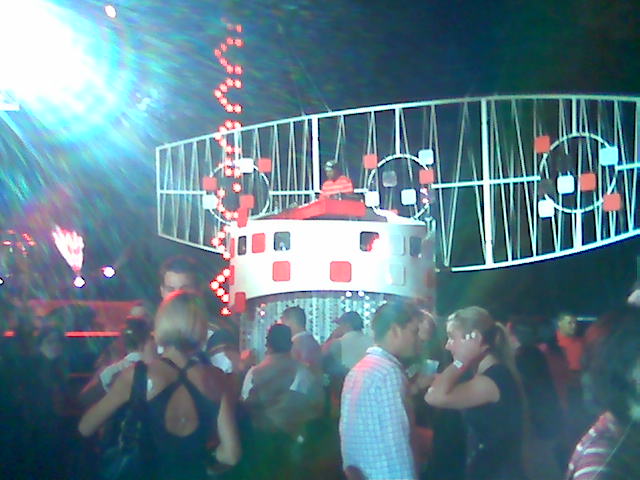
Instead of focussing on sport like the other telecoms companies in South Africa, from the start, Cell C has promoted South African culture, especially music. Their "Sound of the City" concert series basically features local music from bands based in the cities they tour. And at R50 for entry, they are great value for money.
From the outside, it seemed very disorganised and chaotic. But inside, it has to be the most organised concert I have ever been to. DJ Ready D was already spinning the decks as people filled up, and played during band set ups. Each band (there were 8) played for only 20 minutes or so, which was a bit sad, especially considering how well The Rudimentals and Springbok Nude Girls were received by the crowd.
And the Nudies, recently reformed, with their original line up, was simply heads and shoulders above the rest of the line up. They just had the extra something that others seemed to be lacking, not that Judith Spehuma and the Rudimentals didn't get the crowd going.
It was not a great end to the night unfortunately ... I had left the lights on before going in, and my battery had died. But thanks to Tim and a helpful car guard, I got it started, and is all working now! I need to remember to switch off lights next time though!
10 December 2006
Gatecrashed
Tim and Murray had a braai on Friday night, with the occasion apparently being Tim's graduation (he graduates on Monday, so congrats to him!) and end of Murray's exams. Anyway, excuses are rarely required for a social occasion, right?
Anyway, there was a strange gatecrashing event ... which was very interesting. One of the guys at the party (sorry don't remember his name) wanted to meet up with a friend and her party, and Tim just asked him to invite them over. And so they came - a party consisting of two Americans (including the friend), a South African (also the owner of Butlers) and a Canadian of Japanese decent, who now lives in Japan.
Anyway, Mr. James Nakagawa (call me Jamie) and one of the Americans were attending the Diabetes conference at the Cape Town Convention centre, and Jamie, is the CEO of an IT firm, Lifewatcher.com, which specialises in delivering medical information on mobile phones. From things like reminding people to take drugs, to some really cool ideas (that I have previously read of) like: taking a photo of a meal, and getting an approximate estimation of calories and other important information (like, do not eat - too much sugar content for your diabetes condition). And we had an interesting conversation on the backward mobile technology in the USA to image rendering of X-Rays on mobile phones. Many of the projects are similar to some of the projects in the CVC lab (like Andrew or Marshini's telemedicine project) but what was most striking for me, was how true six degrees of separation seems to be.
08 December 2006
Prison Break
So I went to Pollsmoor Prison today ... not something you do everyday really. The Western Province Badminton Association (WPBA) runs a development program in the Female Prison, and today was the official launch of the program (after 4 months of the program actually running!). The WPBA goals in this area are simple really - prison is not only about punishment, but also about rehabilitation. Most of the prisoners, will, one day, be back in the society. It is therefore necessary to allow them some level of interaction, skills and base for them to re-enter society. Sport is one such link, and Pollsmoor offers other sports including cricket, football (soccer) and rugby.
While going to the playing area (which serves as the dining hall at other times), I saw other prisoners (although I did not interact with them), and young children, who are incarcerated with their mothers because they do not have anyone else ... I suppose it is better than foster care. I was later told that for the most part, most of the female prisoners treat the kids as their own, and the kids are actually loved and cared for very well ... most, as some prisoners, like the infamous Dina Rodrigues (who was incidentally being led to counseling when I arrived) are apparently not tolerated or liked by the general prison population.
As for the participants - they may not be out for a while. Some of the ladies, including the most accomplished player to date) are there for the long term - 10 to 20 years, serving for, amongst other crimes, murder and robbery. But I suppose, judgment has been passed, and they are serving their punishment ... it is up to the society to also make sure that they do not commit again, and most of all perhaps, do not allow for a scenario where they feel they need to commit a crime?
While going to the playing area (which serves as the dining hall at other times), I saw other prisoners (although I did not interact with them), and young children, who are incarcerated with their mothers because they do not have anyone else ... I suppose it is better than foster care. I was later told that for the most part, most of the female prisoners treat the kids as their own, and the kids are actually loved and cared for very well ... most, as some prisoners, like the infamous Dina Rodrigues (who was incidentally being led to counseling when I arrived) are apparently not tolerated or liked by the general prison population.
As for the participants - they may not be out for a while. Some of the ladies, including the most accomplished player to date) are there for the long term - 10 to 20 years, serving for, amongst other crimes, murder and robbery. But I suppose, judgment has been passed, and they are serving their punishment ... it is up to the society to also make sure that they do not commit again, and most of all perhaps, do not allow for a scenario where they feel they need to commit a crime?
05 December 2006
Obz Fest 2006
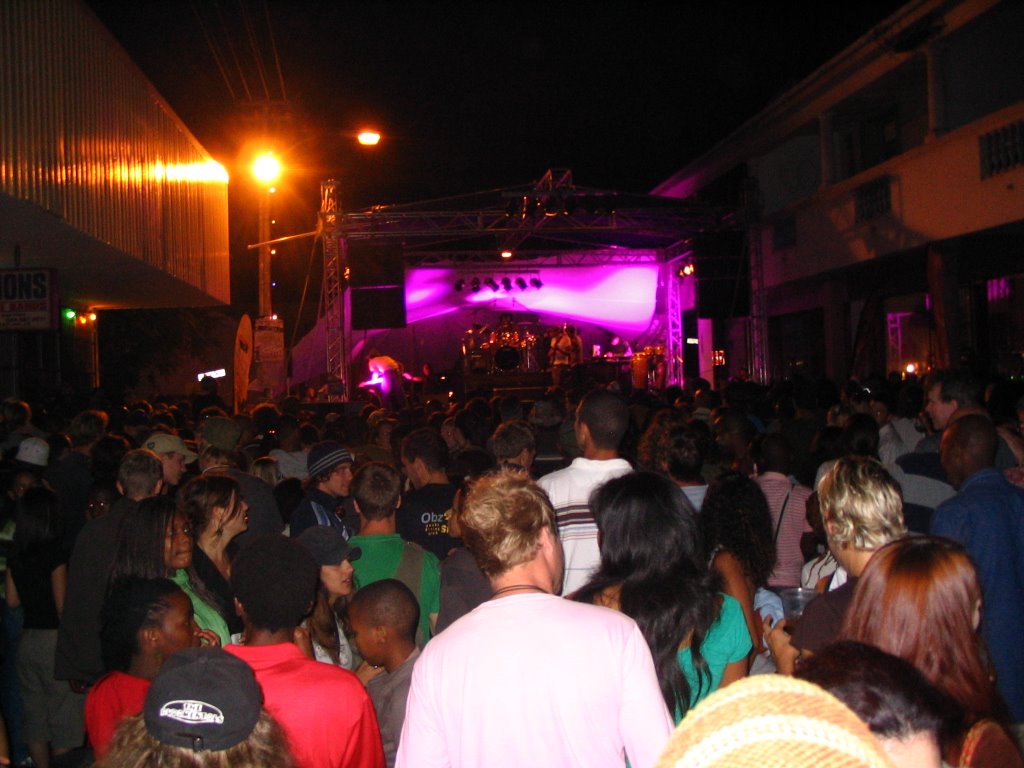
It was supposed to be bigger and better than ever before.And in most respects it was ... but the weather on Sunday just messed up all the plans. For the uninitiated, Obz Fest is a big street festival in Observatory, the hippie quarter of Cape Town. Lot sof great live music, "interesting" stall and good food.
02 December 2006
Movie: Casino Royale
Wow ... I have not watched every bond movie, but of the ones I have watched; I would vote this new one to be my absolute favorite. Sure there was no Q, or Moneypenny but the evolution of Bond from just an agent to a 00 is impressive and the movie is really backed up by an impressive script.
This new Bond is less of an action hero ... he makes mistakes, and gets hurt in the process, he bleeds and almost dies. But you can also see that he is, as M puts it, not just a thug. That said, it is hardly a perfect movie - the romance scenes are too drawn out and seem forced - but again, they do serve a purpose (another break from Bond tradition I suppose).
This new Bond is less of an action hero ... he makes mistakes, and gets hurt in the process, he bleeds and almost dies. But you can also see that he is, as M puts it, not just a thug. That said, it is hardly a perfect movie - the romance scenes are too drawn out and seem forced - but again, they do serve a purpose (another break from Bond tradition I suppose).
01 December 2006
Moving House
After two years at Mowbray, I moved out of the flat and into a four bedroomed house in Rondebosch, a stone's throw away (literally) from UCT. Moving is tough work, especially with the amount of junk I have ...
Anyway, one of the best parts of the new place is the large garden ... ideal for Summer Braais ... so maybe one should be organised soon.
Movie: Borat
Or to give its full name: Borat: Cultural Learnings of America for Make Benefit Glorious Nation of Kazakhstan
First and foremost - it is an amazing movie - because of its content. It is effectively one long, candid camera tale, but at the same time, provides very interesting view of America - uncovering racism, sexism and homophobia.
It is also a shocking movie ... the scene with Borat and his obese producer wrestling in the nude is just awful; but the followup where the two of them run (still naked) into a full convention centre - complete with a trip on an elevator full of people - is an amazing piece of film making and personal bravery.
But over all, it is not an easy movie to watch ... it is as Hans-Peter put it "very embarrassing".
First and foremost - it is an amazing movie - because of its content. It is effectively one long, candid camera tale, but at the same time, provides very interesting view of America - uncovering racism, sexism and homophobia.
It is also a shocking movie ... the scene with Borat and his obese producer wrestling in the nude is just awful; but the followup where the two of them run (still naked) into a full convention centre - complete with a trip on an elevator full of people - is an amazing piece of film making and personal bravery.
But over all, it is not an easy movie to watch ... it is as Hans-Peter put it "very embarrassing".
26 November 2006
Cricket Madness
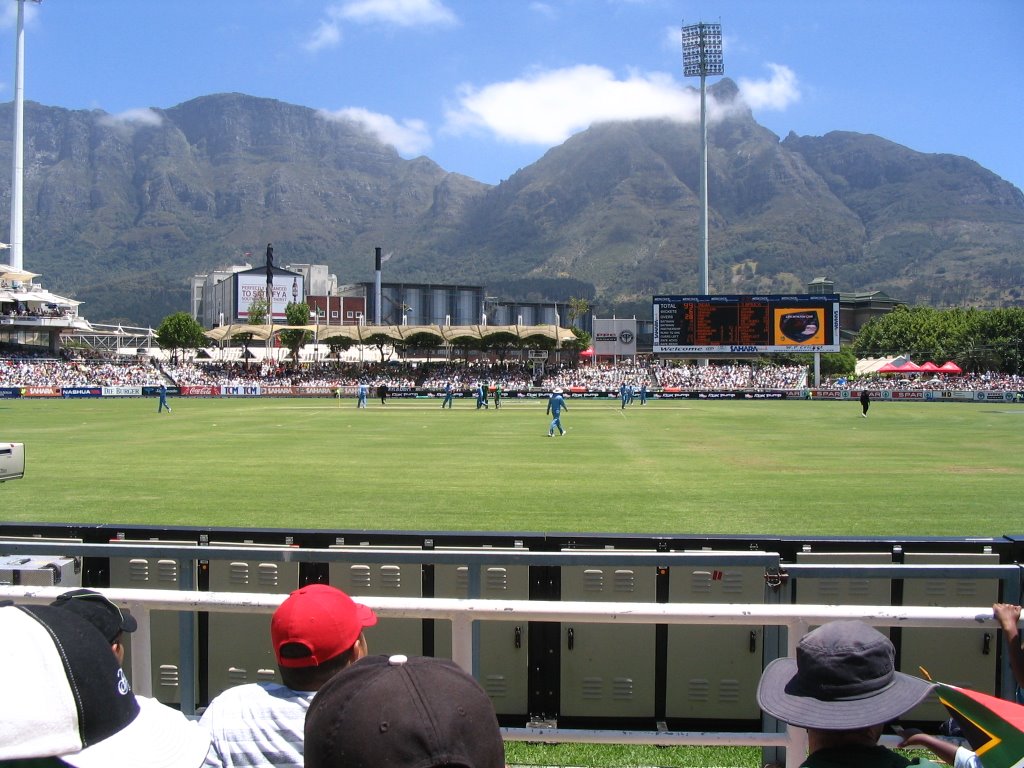
Went to the cricket today with a whole bunch of people (mainly from badminton) ... SA played well to come back to a really good total, and Indian top order batted badly, so it was not really a contest, or a great game. But Kemp and Dhoni's innings were great to watch, so it was good value for money. I still have to see Sachin Tendulkar perform ... second time, and both utter disappointments.
Movie: Children of Men
In the near future, for an unknown reason, women cannot bear children; and as the movie starts out, the youngest person on earth, an 18 year old Brazilian has just been stabbed to death. The world is in chaos - with UK (the location of the movie), converted to a police state; where immigration is disallowed. Immigrants are treated as third or fourth class humans, confined to concentration camps, and subject to police brutality.
In this chaos, we have a miraculous 8 and a bit month pregnant teen, illegal immigrant from Fiji, who needs to be escorted to the ship "Tomorrow", which has connections to the almost mystical and legendary "Human Project". And off course, a pregnant woman is valuable commodity; and almost no one really cares about her or the baby - just the political gains that could be achieved ...
This is a brilliant movie; a definite must see, and the scene with Clive Owen (the bureaucrat/peace activist who ends up escorting/hiding/sheltering the woman baby through to the ship) coming through a warzone with a crying baby is really magical ... and also shows, how a crying baby is never enough to stop all the world wars.
In this chaos, we have a miraculous 8 and a bit month pregnant teen, illegal immigrant from Fiji, who needs to be escorted to the ship "Tomorrow", which has connections to the almost mystical and legendary "Human Project". And off course, a pregnant woman is valuable commodity; and almost no one really cares about her or the baby - just the political gains that could be achieved ...
This is a brilliant movie; a definite must see, and the scene with Clive Owen (the bureaucrat/peace activist who ends up escorting/hiding/sheltering the woman baby through to the ship) coming through a warzone with a crying baby is really magical ... and also shows, how a crying baby is never enough to stop all the world wars.
18 November 2006
PS3 Madness
So the PS3 is finally out, and it's already being sold on e-bay, and it's amazing how much people are willing to pay. A quick glance, some on bidded US $6 999! while there are a number of bids over US $1 000. This begs the question - why did Sony not just sell the initial units (limited availability after all) on auction in the first place ... I think they would have made a lot more money out of it.
13 November 2006
Around the world on a plate
For me, one of the best parts of going to new places is trying out new food. Many years ago, a guidebook to Singapore claimed that you could go round the world sampling food from all over the world in Singapore. The same can be said about Washington DC, and as one of the attendees at WESII put it, the "food scene in Washington DC is awesome". But, being restricted by unfortunate things like "exchange rates" and "student budgets"; I could only restrict myself to the "budget" restaurants and food places; and unfortunately cannot give you any idea of how good (or expensive) the food is at some of the more well rated restaurants.
But even despite these limitations, I did manage to sample a variety of restaurants. This was helped off course, by the fact that, just two blocks from where I was staying, was a block of restaurants (about 12 in total IIRC) catering to the suburbia. I did not eat there every night, but it was the main area. So, in total I managed to go to the following different types (in no order):
The "food scene" in Edinburgh was less diverse (from what I saw), and well, like everything British, more expensive. Thus, there was more eating at the traditional "English Pub" (well curry is a traditional English food right?) than anywhere else.
But even despite these limitations, I did manage to sample a variety of restaurants. This was helped off course, by the fact that, just two blocks from where I was staying, was a block of restaurants (about 12 in total IIRC) catering to the suburbia. I did not eat there every night, but it was the main area. So, in total I managed to go to the following different types (in no order):
- Japanese
- Afghan
- Italian
- Pizza and Movie place (see earlier blog post)
- Mexican
- Greek
- The American Diner (really greasy, really crap)
- A whole lot of Subway
- Chinese
The "food scene" in Edinburgh was less diverse (from what I saw), and well, like everything British, more expensive. Thus, there was more eating at the traditional "English Pub" (well curry is a traditional English food right?) than anywhere else.
09 November 2006
Movie: Kekxili - Mountain Patrol
First and formost - this movie is set in Tibet, so the landscapes are amazing; but that does not really distract from an amazing story; about a couple of people, risking everything to hunt down poachers of the endangered Tibetan Antelope. It is based on a true story, and is told in a documentary style; which makes the movie an even more harrowing tale, focussing on various angles of the situation - the poor vilagers who are almost "forced" into poaching, how patrolmen's lives are affected by their actions; and even how they have to make really, really dificult moral judgement calls. It is not a hollywood movie - so do not expect a fairytale ending; but it is one of the most impressive movies I have seen, and one of the most moving.
Movie: The Devil Wears Prada
It was billed as a darkish comedy, something different from the ordinary. Unfortunately, it was nothing special ... just a twist of an usual storyline ... girl (aspiring journalist) applies for job as a PA to a fashion editor, gets the boss from hell, refuses to quit and adapts, thus becoming a "different" person ... you get the idea. It was funny - only because of the number of outrageous tasks set by the boss .. like finding the new Harry Potter. A few laughs, but nothing special really.
Movie: Cars
Yet more reviews courtesy of the Virgin in-flight entertainment system.
Not much can be said in addition to what has already been written about the Disney-Pixar movie. It is a simple, predictible story, with the traditional Disney moral for the kids; but it is so much fun, and so well animated - it is weel worth watching. And if you like cars, you will appreciate the differences in the characters as represented by the different cars.
Not much can be said in addition to what has already been written about the Disney-Pixar movie. It is a simple, predictible story, with the traditional Disney moral for the kids; but it is so much fun, and so well animated - it is weel worth watching. And if you like cars, you will appreciate the differences in the characters as represented by the different cars.
08 November 2006
The Scottish Highlands (a phlog)
Yesterday, Eric had to go to work (yes some people do work), and I decided that a trip to the Highlands would be a nice idea. It was quite expensive (30 Pounds!), but the weather was good (i.e. no rain) and in the end, a great trip really. On the whole, I learnt two main things about Scotland: 1) It is a beautiful part of the world, and it would be great to do a similar trip on a slower pace. 2) There have been a number of rather violent people who have wanted this beauty, and have killed mercilessly towards this purpose. In fact, the major "people" highlights of the tour centred around wars and battles.
In my past trips (for the last 3 years anyway), I have never done city tours or paid guided tours (mainly because of the expense). These have one real advantage - you get to hear a lot more about the history and stories that come with the place. Stories and facts that are well arranged and well told ... a very nice complete package. Anyway, enough mindless mumbo jumbo ... and onto the pics
 A highlands cow ... damn these things are big
 The first loch we stopped at
 Same loch, higher up
 Route through the mountains
 The highlands reminded me of almost every story I had read by British authors, with a number of rivers, small forests - just no wildlife
 Urquhart Castle
 Searching for Nessie at Loch Ness
 Urquhart Castle (from Loch Ness)
 Nessie Explained?
In my past trips (for the last 3 years anyway), I have never done city tours or paid guided tours (mainly because of the expense). These have one real advantage - you get to hear a lot more about the history and stories that come with the place. Stories and facts that are well arranged and well told ... a very nice complete package. Anyway, enough mindless mumbo jumbo ... and onto the pics
 A highlands cow ... damn these things are big
 The first loch we stopped at
 Same loch, higher up
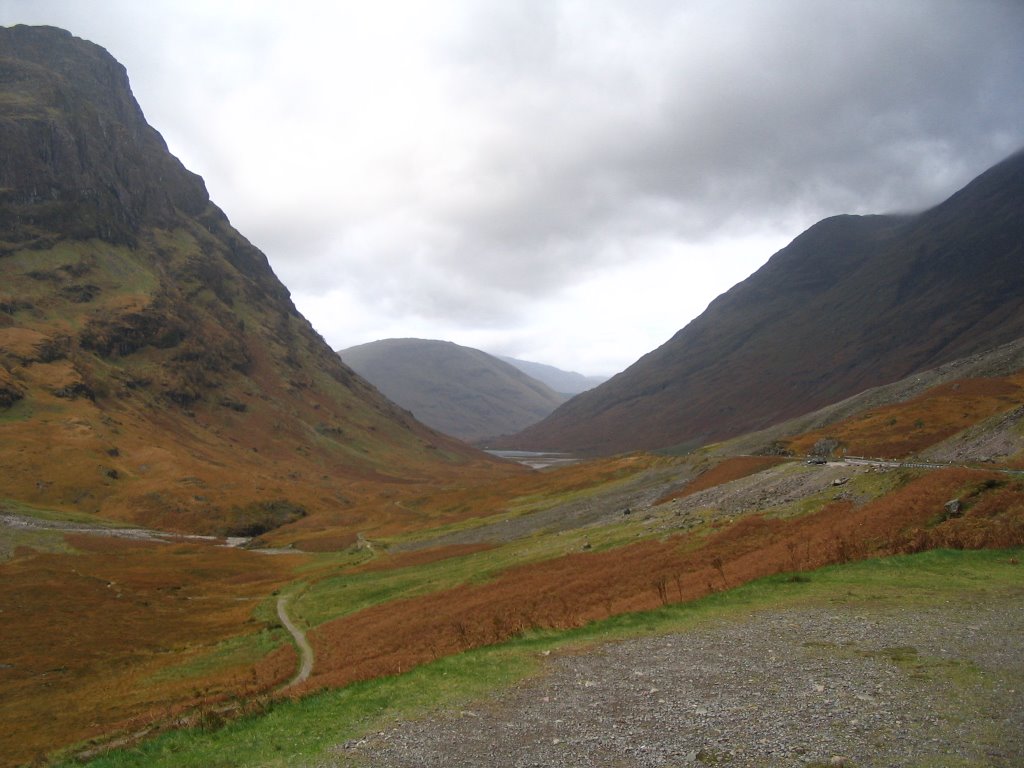 Route through the mountains
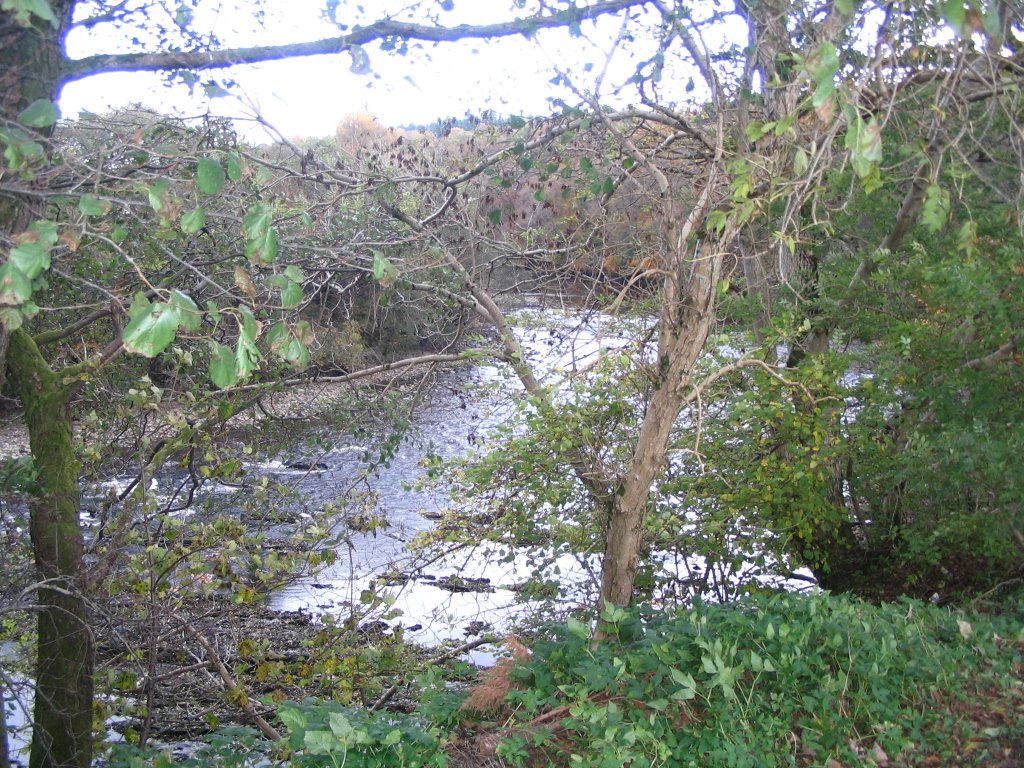 The highlands reminded me of almost every story I had read by British authors, with a number of rivers, small forests - just no wildlife
  Urquhart Castle
 Searching for Nessie at Loch Ness
 Urquhart Castle (from Loch Ness)
 Nessie Explained?
07 November 2006
Reflections: ACM CCS 2006 and ACM STC 2006
I had been meaning to do a review earlier, but I have been busy exploring Scotland instead (and proof reading Honours Project reports) :p
To be honest, the program for the main ACM CCS 2006 was not very exciting; mainly because there was too much focus on cryptography, and less on security of systems in general. Also, I ended up at times choosing the wrong sessions - I went to a tutorial on Digital Forensics, where I learnt nothing new; and was a horrible presentation; and I later heard that the alternate, intrusion detection research papers, was quite good. Similarly, the paper sessions on Thursday turned out to be quite dreary; while I heard great reviews on the tutorials ... oh well.
The keynote talk, by Peter Neumann, while interesting at parts, was largely inconsequential - as he was effectively talking to the converted. His talk centred around software design that does not take account of the full scenario - and thus leads to security pitfalls. This has to do with a lot of things, including bad design principles and off course the lack of software liability.
The most interesting paper on Day 1, was "Hot or Not: Revealing Hidden Services by their Clock Skew", which investigated the potential of revealing a person's geographical location by studying his/her clock skew due to temperature fluctuations. It was a fun discussion; although maybe not very applicable.
Day 2 had a couple of interesting papers, mainly dealing with privacy. "Doppelganger: Better Browser Privacy Without the Bother", discussed a new cookie management system using Firefox extension. Not recommended for UCT though - requires quite a bit of bandwidth to work :p The very next paper, "Fourth-Factor Authentication: Somebody You Know", was also an interesting idea, discussing how to manage password retrievals in a more secure manner.
The paper in the session after lunch, "How to Win the Clone Wars: Efficient Periodic n-Times Anonymous Authentication", featured a brilliant presentation, and the content was interesting, but I don't think it will be easy to implement such a system in real life. The last session featured various attacks, and these were, as always, very interesting; including a discussion on botnets created through browser exploits, a discussion of 1-time pad problems in current software and a paper on short attacks through keyboard emanations - not as effective as last year's paper, but more useful for short attacks. Day 3 featured interesting papers but I wasn't really bowled over by any of them.
The Scalable Trusted Computing Workshop, on Friday was quite interesting - although the papers focussed more on "scalable" aspect. I learnt a lot more about the Trusted Computing Group, and even made some interesting contacts, so it was good from that point of view.
The highlight of the conference though, was probably, meeting Michael Schroeder (of Needham-Schroeder fame), who was being honoured by SIGSAC for his contributions to computer security. When we were talking, he mentioned reading about mobile banking in South Africa in the Economist, and he was very interested in the results of the honours mobile banking project. So, if we reference his paper, I am sure it is already one step to publishing (and the honours guys haven't even officially finished)!
To be honest, the program for the main ACM CCS 2006 was not very exciting; mainly because there was too much focus on cryptography, and less on security of systems in general. Also, I ended up at times choosing the wrong sessions - I went to a tutorial on Digital Forensics, where I learnt nothing new; and was a horrible presentation; and I later heard that the alternate, intrusion detection research papers, was quite good. Similarly, the paper sessions on Thursday turned out to be quite dreary; while I heard great reviews on the tutorials ... oh well.
The keynote talk, by Peter Neumann, while interesting at parts, was largely inconsequential - as he was effectively talking to the converted. His talk centred around software design that does not take account of the full scenario - and thus leads to security pitfalls. This has to do with a lot of things, including bad design principles and off course the lack of software liability.
The most interesting paper on Day 1, was "Hot or Not: Revealing Hidden Services by their Clock Skew", which investigated the potential of revealing a person's geographical location by studying his/her clock skew due to temperature fluctuations. It was a fun discussion; although maybe not very applicable.
Day 2 had a couple of interesting papers, mainly dealing with privacy. "Doppelganger: Better Browser Privacy Without the Bother", discussed a new cookie management system using Firefox extension. Not recommended for UCT though - requires quite a bit of bandwidth to work :p The very next paper, "Fourth-Factor Authentication: Somebody You Know", was also an interesting idea, discussing how to manage password retrievals in a more secure manner.
The paper in the session after lunch, "How to Win the Clone Wars: Efficient Periodic n-Times Anonymous Authentication", featured a brilliant presentation, and the content was interesting, but I don't think it will be easy to implement such a system in real life. The last session featured various attacks, and these were, as always, very interesting; including a discussion on botnets created through browser exploits, a discussion of 1-time pad problems in current software and a paper on short attacks through keyboard emanations - not as effective as last year's paper, but more useful for short attacks. Day 3 featured interesting papers but I wasn't really bowled over by any of them.
The Scalable Trusted Computing Workshop, on Friday was quite interesting - although the papers focussed more on "scalable" aspect. I learnt a lot more about the Trusted Computing Group, and even made some interesting contacts, so it was good from that point of view.
The highlight of the conference though, was probably, meeting Michael Schroeder (of Needham-Schroeder fame), who was being honoured by SIGSAC for his contributions to computer security. When we were talking, he mentioned reading about mobile banking in South Africa in the Economist, and he was very interested in the results of the honours mobile banking project. So, if we reference his paper, I am sure it is already one step to publishing (and the honours guys haven't even officially finished)!
31 October 2006
Reflections: ACM DRM 2006
Yesterday was basically the reason I am here - to attend and present my paper at the DRM Workshop at the ACM Computer and Communications Security (CCS) Conference. So, this is a brief reflection of the proceedings of the workshop.
The first paper, by some researchers from SUN, looked at some of the business models that movie industry could adapt from the MMORPG world. While the ideas are certainly applicable; I am not really sure of the practicality of the ideas. The second paper looked at privacy, from the point of legal and economic practicalities. Basically, the paper argues that there exists certain legal and economic obligations if a business wishes to collect private information. These obligations create a risk; and thus creates ceiling on how much privacy can be afforded to customers. It was a very interesting paper; but I think it glossed over one crucial point - very rarely do businesses actually take into full consideration the economic and legal obligations when they do collect private data.
My paper, which was next, was very well received, and attracted quite a lot of interest. I was not really expecting a great reception; because the paper is quite simple in nature - but it is an area that has not really been addressed before. So, I was pleasantly surprised at the paper's reception.
The next paper on a view only file system has been discussed before as a mechanism for short term DRM solution. The one presented this year went a step further and designed a VM based system. It could work; but I am not convinced on the security layer between the VM and OS/lower level VM; or the performance overheads. The paper following it discussed an interesting key distribution strategy; but I must admit I did not follow it as well as I should have.
Tom Kalker, from HP Labs and Coral, presented the invited talk focussing on interoperability. Most people who have voiced opinions against DRM, seem to imply hatred on the lack of DRM interoperability, and not some of the other issues. He discussed how interoperability in DRM is not only a format issue; but also a business and complete technological issue. He talked about Coral, which uses a credential system, allowing for interoperability. However, it is by no ways a perfect solution, as every device would still require their own file format etc.
The next paper discussed more interesting code obsfucation and diversification as a mechanism to combat piracy. It was quite impressive, until the performance hit .... 840 times slower!
Pramod Jamkhedkar and Gregory Heileman presented their paper next, and their DRM project is very similar to mine; and we have been presenting or discussing similar ideas for the past three years. This year, they discussed, what they considered fundamental flaws in Rights Expression languages. In a few ways, their arguement was flawed, because it discussed mainly the flaws of XrML and did not consider the fact that some of the issues are being addressed or have been addressed in other RELs like ODRL. However, the issues raised are correct and needed to be recognised.
The next talk on interoperability, was a bit of a miss; simply because a lot of the content seemed to be contrary to the issues raised earlier; and the underlying details were hazy at best. The talk following it was very interesting; discussing some of the background to Intel's LeGrande architecture. Bascially, the OS is going to be dead - instead, the CPU itself will have a trusted OS base; complete with drivers and firmware. Applications will run on top of this base; in a completely protected environment, similar in operation to Multics. I am not sure of the maturity of the solution, but both Intel and AMD, together with other interested parties, have been pouring money into similar projects; so something is bound to come up.
The next paper, from Phillips Labs, discussed ideas on how to lower consumer anger and better ways to handle consumers who make use of pirated DVDs; or more appropriately Blu-Ray discs. Much of the work presented revolved around the use and operation of blacklists in Blu-Tay discs. It was really interesting; especially on the changing position.
The last paper of the workshop on watermarking presented nothing new; and in fact I have seen many better applications of watermarking.
The first paper, by some researchers from SUN, looked at some of the business models that movie industry could adapt from the MMORPG world. While the ideas are certainly applicable; I am not really sure of the practicality of the ideas. The second paper looked at privacy, from the point of legal and economic practicalities. Basically, the paper argues that there exists certain legal and economic obligations if a business wishes to collect private information. These obligations create a risk; and thus creates ceiling on how much privacy can be afforded to customers. It was a very interesting paper; but I think it glossed over one crucial point - very rarely do businesses actually take into full consideration the economic and legal obligations when they do collect private data.
My paper, which was next, was very well received, and attracted quite a lot of interest. I was not really expecting a great reception; because the paper is quite simple in nature - but it is an area that has not really been addressed before. So, I was pleasantly surprised at the paper's reception.
The next paper on a view only file system has been discussed before as a mechanism for short term DRM solution. The one presented this year went a step further and designed a VM based system. It could work; but I am not convinced on the security layer between the VM and OS/lower level VM; or the performance overheads. The paper following it discussed an interesting key distribution strategy; but I must admit I did not follow it as well as I should have.
Tom Kalker, from HP Labs and Coral, presented the invited talk focussing on interoperability. Most people who have voiced opinions against DRM, seem to imply hatred on the lack of DRM interoperability, and not some of the other issues. He discussed how interoperability in DRM is not only a format issue; but also a business and complete technological issue. He talked about Coral, which uses a credential system, allowing for interoperability. However, it is by no ways a perfect solution, as every device would still require their own file format etc.
The next paper discussed more interesting code obsfucation and diversification as a mechanism to combat piracy. It was quite impressive, until the performance hit .... 840 times slower!
Pramod Jamkhedkar and Gregory Heileman presented their paper next, and their DRM project is very similar to mine; and we have been presenting or discussing similar ideas for the past three years. This year, they discussed, what they considered fundamental flaws in Rights Expression languages. In a few ways, their arguement was flawed, because it discussed mainly the flaws of XrML and did not consider the fact that some of the issues are being addressed or have been addressed in other RELs like ODRL. However, the issues raised are correct and needed to be recognised.
The next talk on interoperability, was a bit of a miss; simply because a lot of the content seemed to be contrary to the issues raised earlier; and the underlying details were hazy at best. The talk following it was very interesting; discussing some of the background to Intel's LeGrande architecture. Bascially, the OS is going to be dead - instead, the CPU itself will have a trusted OS base; complete with drivers and firmware. Applications will run on top of this base; in a completely protected environment, similar in operation to Multics. I am not sure of the maturity of the solution, but both Intel and AMD, together with other interested parties, have been pouring money into similar projects; so something is bound to come up.
The next paper, from Phillips Labs, discussed ideas on how to lower consumer anger and better ways to handle consumers who make use of pirated DVDs; or more appropriately Blu-Ray discs. Much of the work presented revolved around the use and operation of blacklists in Blu-Tay discs. It was really interesting; especially on the changing position.
The last paper of the workshop on watermarking presented nothing new; and in fact I have seen many better applications of watermarking.
30 October 2006
Movie: Talladega Nights: The Ballad of Ricky Bobby
I went to watch the movie here in DC with a friend from cyberspace ... one of the guys from the Atlas F1 Paddock Club. The movie house itself was interesting - basically an auditorium like most movie houses; but one that is also a full service restaurant and features arm chairs instead of normal movie seats. So we had two F1 fans watching a movie about Nascar while eating Pizzas.
The movie itself was surprisingly not too bad; and the rip offs of team orders and F1 were brilliantly done. As entertainment value, Nascar is not bad at all; and neither is the movie. If you are a racing fan; it's great; if only to identify all the different parallels.
The movie itself was surprisingly not too bad; and the rip offs of team orders and F1 were brilliantly done. As entertainment value, Nascar is not bad at all; and neither is the movie. If you are a racing fan; it's great; if only to identify all the different parallels.
Dam Festival 2006
I saw an ad talking about a Indie Rock festival in Washington DC; and I just couldn't give it a miss. Basically, a number of bands; spread out over a number of clubs playing in the evenings. Unfortunately, I managed to go to only one of the clubs - and it was an interesting experience.
First up; the club itself was quite small. Apparently, rock is a big genre in the DC area - the size of the club, Velvet Lounge, would lead you to think otherwise. Another disappointing aspect was the fact that most of the people who were there; seemed to be band supporters - they were there because they knew someone in one or more of the bands. The numbers were really small; and there was no real vibe - no mosh pits. Being Halloween weekend, there were a few costumed attendees - the best being a guy dressed up in a robot suit; completely with a functional iPod and speakers! At $8 cover charge; it was quite cheap; and good return for money.
The first band, Drunken Sufis (ft. The Psycho Terrorists), was in my opinion the best of the lot. They had an impressive stage show; and much of their music was about the War in Iraq, Bush etc ... almost Green Dayish. They had good songs and put on a great show - couldn't ask for much more.
The second band, from New Zealand, Over the Atlantic, was interesting - comprising of two members (bass guitarist and a lead guitarist/vocalist) and a computer doubling up as a synthesiser effort. It was interesting music - no doubt about that; but it just didn't click for me ... might work on radio; maybe - but not really a live band style.
The third and fourth bands, The Opposite Sex and The Object Lesson resp, were more mainstream rock bands; singing largely incomprehensible lyrics. However, they had really good music - brilliant guitar and drum play. The Opposite Sex features one member doubling up on a saxophone and a synthesiser; which reminded me a bit about the Nude Girls; but their songs were just not that great. The Object Lesson featured a hot keyboard player (wearing a catholic school girl outfit :p) instead of a Sax player and was the only band featuring a female member. I did not stay for the full set of the last band, The Chance, but they didn't seem too different from the two previous bands.
Overall, the music itself wasn't too bad - but it didn't have the vibe - maybe it was just a bad day.
First up; the club itself was quite small. Apparently, rock is a big genre in the DC area - the size of the club, Velvet Lounge, would lead you to think otherwise. Another disappointing aspect was the fact that most of the people who were there; seemed to be band supporters - they were there because they knew someone in one or more of the bands. The numbers were really small; and there was no real vibe - no mosh pits. Being Halloween weekend, there were a few costumed attendees - the best being a guy dressed up in a robot suit; completely with a functional iPod and speakers! At $8 cover charge; it was quite cheap; and good return for money.
The first band, Drunken Sufis (ft. The Psycho Terrorists), was in my opinion the best of the lot. They had an impressive stage show; and much of their music was about the War in Iraq, Bush etc ... almost Green Dayish. They had good songs and put on a great show - couldn't ask for much more.
The second band, from New Zealand, Over the Atlantic, was interesting - comprising of two members (bass guitarist and a lead guitarist/vocalist) and a computer doubling up as a synthesiser effort. It was interesting music - no doubt about that; but it just didn't click for me ... might work on radio; maybe - but not really a live band style.
The third and fourth bands, The Opposite Sex and The Object Lesson resp, were more mainstream rock bands; singing largely incomprehensible lyrics. However, they had really good music - brilliant guitar and drum play. The Opposite Sex features one member doubling up on a saxophone and a synthesiser; which reminded me a bit about the Nude Girls; but their songs were just not that great. The Object Lesson featured a hot keyboard player (wearing a catholic school girl outfit :p) instead of a Sax player and was the only band featuring a female member. I did not stay for the full set of the last band, The Chance, but they didn't seem too different from the two previous bands.
Overall, the music itself wasn't too bad - but it didn't have the vibe - maybe it was just a bad day.
Subscribe to:
Posts (Atom)