That was just one of the headlines I saw this morning on my cycle ride, and for once, Zuma, baby Jordan and the powercuts were off the front page. Sunday's cricket match was remarkable - not only because of the number of runs scored, but also because of South Africa's spirited chase and victory. But Cricinfo's label of the match as the greatest ever ODI is just wrong in my opinion. After all, a cricket match is a battle between the batsmen and the bowlers, and in Sundays game, other than Nathan Bracken, bowlers did not even feature in the game. To be honest, I think that neither Gibbs nor Ponting really deserved the man of the match - because while their performances were good - it should be expected that at least one batsman will make a lot of runs on that pitch. On the other hand, Bracken took 5 of 14 wickets that fell on Sunday - a greater contribution percentage wise than any other player.
As for the greatest match - I think the 1999 semi final between SA and Australia still ranks as the best ODI ever - it featured everything about cricket - runs, wickets and great fielding.
14 March 2006


13 March 2006
Movie: The New World
The New World is a beautiful movie. Unfortunately, that is the only good thing that can be said about the movie (although the music wasn't bad). It is extremely long (ok not as long as King Kong), has a very simple plot, almost no conversation and is extremely boring. In fact, Carl confesses to have fallen asleep during the movie. The movie is basically the story of Pocahontas, so if you are really keen on knowing the story (white man comes to America in 1500's, meets a native american princess, fall in love etc), you are better off watching the Disney movie.
Interestingly enough, there is a shorter version (by about 20 minutes) available ... why on earth was the extended version not released as a DVD? All said however, its cinematography is top class ... but I cannot really recommend it as a movie.
Interestingly enough, there is a shorter version (by about 20 minutes) available ... why on earth was the extended version not released as a DVD? All said however, its cinematography is top class ... but I cannot really recommend it as a movie.
03 March 2006
The Big DRM Mistake?
In his column, Scott Granneman calls DRM a mistake; mainly because of its many current shortcomings and also because of the restrictions posed by DRM to consumers. In my opinion, that is not the big mistake about DRM - the mistake is how badly DRM has essentially been marketed, including its vilification in the GPL 3 draft.
Fundamentally, DRM is a about persistent access control - it is a term for a set of technologies that allow for data to be protected beyond the file system of the original machine. Thus, for example, the read/write/execute access control on most *nix file systems will not only be applicable to the original machine but to all machines. DRM is not perfect yet - that is the reason it is still an active research area; but a claim like "it will never be perfect" should not be a reason to investigate and prove that such a claim is false.
And most of the problems with DRM is not about technological failure - but a failure of communication and bad marketing. Granted The SONY-BMG saga was about technological failure - because fundamentally it was bad technology. But it was also about a miscommunication - customers should be told that they are buying a DRM enabled CD. Similarly, my criticisms on Vodafonelive (which I made to the INDICARE Workshop in Budapest this year, and in a law paper I co-wrote with Thomas Bechle last year) are based on the failure of Vodafone to make the consumer aware.
And fundamentally - many of the fair use issues are not a matter of given right. Just because a traditional CD allows me to give to a friend should not imply that any future format will allow me the same freedoms. Fundamentally, DRM enabled CDs are not the same thing as non DRM enabled CDs and should be labeled as such. It is like selling a German book sealed in an English cover without warning that the contents are in German. It is a case of bad trade practices and bad communication - and if consumers don't like the restrictions, they shouldn't buy it, but they need to be given the choice.
At the end of the day I believe that DRM does have a place - it can be used to protect sensitive data that needs to be highly regulated - for example, your health records. trying to advocate the DRM should not be researched because of possible misuse is just plain wrong.
Fundamentally, DRM is a about persistent access control - it is a term for a set of technologies that allow for data to be protected beyond the file system of the original machine. Thus, for example, the read/write/execute access control on most *nix file systems will not only be applicable to the original machine but to all machines. DRM is not perfect yet - that is the reason it is still an active research area; but a claim like "it will never be perfect" should not be a reason to investigate and prove that such a claim is false.
And most of the problems with DRM is not about technological failure - but a failure of communication and bad marketing. Granted The SONY-BMG saga was about technological failure - because fundamentally it was bad technology. But it was also about a miscommunication - customers should be told that they are buying a DRM enabled CD. Similarly, my criticisms on Vodafonelive (which I made to the INDICARE Workshop in Budapest this year, and in a law paper I co-wrote with Thomas Bechle last year) are based on the failure of Vodafone to make the consumer aware.
And fundamentally - many of the fair use issues are not a matter of given right. Just because a traditional CD allows me to give to a friend should not imply that any future format will allow me the same freedoms. Fundamentally, DRM enabled CDs are not the same thing as non DRM enabled CDs and should be labeled as such. It is like selling a German book sealed in an English cover without warning that the contents are in German. It is a case of bad trade practices and bad communication - and if consumers don't like the restrictions, they shouldn't buy it, but they need to be given the choice.
At the end of the day I believe that DRM does have a place - it can be used to protect sensitive data that needs to be highly regulated - for example, your health records. trying to advocate the DRM should not be researched because of possible misuse is just plain wrong.
Movie: The Matador
Ok, Pierce Brosman is known as an ok actor - great as a James Bond or a jewel/art thief but not really someone who can really play a totally of the wall character. His portal in the Matador is, as a reviewer on IMDB put it, "coming out party for Pierce Brosnan the actor".
The story is about a hitman, Julien Noble (or as he describes himself, a facilitator) and his life with no connections to people or places and his meeting with a small time businessman trying to make the deal of his life. It is a comedy, but the humor is very twisted - not really dark - but not exactly the normal mushy romantic comedy stuff. And the movie is not very politically correct either - after all it is a movie about a hitman.
Highly enjoyable, and although I doubt Pierce Brosman will win the Oscar - it is a definitely a well deserved nomination. Oh, just as an example of how politically incorrect and twisted the humor can be; just have a look at the quotes page on IMDB.
The story is about a hitman, Julien Noble (or as he describes himself, a facilitator) and his life with no connections to people or places and his meeting with a small time businessman trying to make the deal of his life. It is a comedy, but the humor is very twisted - not really dark - but not exactly the normal mushy romantic comedy stuff. And the movie is not very politically correct either - after all it is a movie about a hitman.
Highly enjoyable, and although I doubt Pierce Brosman will win the Oscar - it is a definitely a well deserved nomination. Oh, just as an example of how politically incorrect and twisted the humor can be; just have a look at the quotes page on IMDB.
Movie: Walk the Line
For the most part, I do not really like country music ... except when it comes to Johnny Cash ... I even own an album of his! To be honest, I first heard Johnny Cash when Barney Simon played a number of songs after his death ... and I was intrigued, because it was not like anything I had heard before. I also like his song "Satisfied Mind" on the Kill Bill soundtrack.
The movie, now known for its number of awards (or nominations) is the story of his life before he married his second wife June Carter (Reese Witherspoon). Like Ray last year, it was a celebration of a musician's life and how the artist overcomes their various obstacles. Like Ray, a large part of the film is devoted to substance abuse, and how Johnny Cash overcomes his "pills" and "alcohol" addiction and takes control of his life once again.
The acting performances are really outstanding in this movie and convincing. It is well worth watching and maybe you will also go buy a Johnny Cash album, just to hear Folsom Prison Blue ...
The movie, now known for its number of awards (or nominations) is the story of his life before he married his second wife June Carter (Reese Witherspoon). Like Ray last year, it was a celebration of a musician's life and how the artist overcomes their various obstacles. Like Ray, a large part of the film is devoted to substance abuse, and how Johnny Cash overcomes his "pills" and "alcohol" addiction and takes control of his life once again.
The acting performances are really outstanding in this movie and convincing. It is well worth watching and maybe you will also go buy a Johnny Cash album, just to hear Folsom Prison Blue ...
Movie: Derailed
This is not a movie I would normally go to watch - seemingly a romantic comedy/thriller starring Clive Owen and Jennifer Aniston. At its core, it is a story about an affair, followed by blackmail, and then how Clive Owen's character comes to deal with the blackmail. It was very predictable to be honest - I have just read too many real news stories with a similar plotline (to start off with anyway). But, it was well acted, had good character development and was, as my flatmate would put it, a good effort. Nothing spectacular, but a good effort.
24 February 2006
Who Broke Up AT&T
As some of you know, lat year, I participated in an electronic law course given by Prof Julien Hofman. That was essentially e-Law 1. Anyway, yesterday afternoon, I wanted to talk to Prof. Hofman on a separate issue regarding contract law, and ended up participating in his e-Law 2 class. The class is very different to most courses offered at UCT (well it is a MLB/MPhil level course) where the students are going to tackle a specific part of electronic law and deliver a report of approximately 150 page (this can then later be used as their minor dissertation). This report will also be condensed down to approximately 30 pages, and all the summaries will be combined to create a book on the electronic law landscape in South Africa. While I do not have the time to participate in this process, I am still invited to attend the seminars etc. making up the class.
Anyway, yesterday afternoon, the lecture was given by a Mr Ray G Besing (pronounced Bee-sing), who was introduced as a US lawyer and author of the book "Who Broke Up AT&T". He gave a very interesting lecture on monopolies, the legal and the economics, with particular focus on Telecom monopolies - esp considering that telecommunications have become a cornerstone in modern life. His comparisons to the price of Telkom rates to other countries was not new, but he stressed that it is up to the public to force monopolies to lower prices, because ultimately, regulatory bodies like ICASA have a mandate to serve to public. The major part of his lecture revolved around the breakup of the AT&T monopoly, a case he is familiar with simply because he was the lead lawyer in two of the three major cases involving AT&T and their breakup.
Prof Hofman and Mr Besing intend to run a course on telecoms law - a course that could be very interesting and should be relevant to many people in South Africa ...
Anyway, yesterday afternoon, the lecture was given by a Mr Ray G Besing (pronounced Bee-sing), who was introduced as a US lawyer and author of the book "Who Broke Up AT&T". He gave a very interesting lecture on monopolies, the legal and the economics, with particular focus on Telecom monopolies - esp considering that telecommunications have become a cornerstone in modern life. His comparisons to the price of Telkom rates to other countries was not new, but he stressed that it is up to the public to force monopolies to lower prices, because ultimately, regulatory bodies like ICASA have a mandate to serve to public. The major part of his lecture revolved around the breakup of the AT&T monopoly, a case he is familiar with simply because he was the lead lawyer in two of the three major cases involving AT&T and their breakup.
Prof Hofman and Mr Besing intend to run a course on telecoms law - a course that could be very interesting and should be relevant to many people in South Africa ...
22 February 2006
Powercuts
Since Sunday morning, the Western Cape has been experiencing powercuts - primarily because of a breakdown of a turbine at the Koeberg Nuclear power plant, but also due to other capacity issues. Off course, Eskom has been warning of the potential problems for years - and has been proposing a new nuclear power plant for the last 5 or so years to alleviate some of these issues, but no would listen. What is really ironic off course, is that the turbine was due for scheduled maintenance next week, and the Monday Paper (UCT run newspaper) actually has an article encouraging energy conservation to alleviate power problems.
Anyway, I meant to phlog about my birthday braai held on Saturday, hours before the start of the blackouts - but lack of power has meant a lack of network availability, which has also implied a very slow network once it is back up ... so I will not waste precious bandwidth on such frivolity ;)
Anyway, I meant to phlog about my birthday braai held on Saturday, hours before the start of the blackouts - but lack of power has meant a lack of network availability, which has also implied a very slow network once it is back up ... so I will not waste precious bandwidth on such frivolity ;)
16 February 2006
Identity
From a suggestion I made in Carl's blog, this post is a mind dump, a rant, bitching, moaning ... whatever the term is. I am not even sure that my post makes any sense. You are forewarned. However, I can assure you, unlike Carl's posts, my post has no romantic traumas ;) ------------------------------------------------------------------------------------------------
Identity is a problem I have grappled with for a long time in my research. After all, what exactly is a user of a DRM system? And for that matter, what exactly is being protected? And what about the rules - how does the rules match up to the users, and the data? The problem is, identity itself is a very difficult concept to define, even when restricting itself to the digital realm. Even RFC 2828, the security glossary (which has become my de-facto second dictionary) does not give an adequate definition.
So, in a recent paper attempt (attempt because the paper was ultimately rejected), I had to fall back on the Oxford English Dictionary to define the term identity, which states:
Colloquially, identity is simply - who are you? But as discussed in Sophie's Choice, it is a very difficult question to answer. If identity seeks to define who or what something is, it becomes very difficult to pin down. Does identity then depend on the person's cultural heritage? moral compass? their geography? their political compass?
I first started thinking about this while leaving Cape Town International Airport for my trip to Budapest. The passport controller looked at me very strangely, and then asked rather curiously why I have a South African passport. It was not because I am of Indian origin, but rather because I was born in Nigeria? In fact, many times on overseas conferences, I have been asked how come an Indian guy carries a South African passport - a question I think many of my South African Indian friends could find offensive. I have found the idea of granting nationality purely on the basis of where a person is born to be rather stupid -- after all what does that have anything to do with it? So I qualify for a Nigerian passport because I was born there?
As for cultural identity - it is a difficult question for me. I have been brought up by fairly devout Hindu parents, and my broader family were once very devout Hindus - but then most Indians in India are rather devout. But many of my values differ greatly from my parents (and even greater difference to my other relatives in India). But much of my identity is not South African per se, as much of my beliefs etc. have been from my own extensive readings in all sorts of things. Although, I have spent about half my life in South Africa, I have also spent large amount of time in other countries.
This brings me back to my original question - what is identity? At the end of the day, does identity really matter? If a fingerprint, or iris scan represents an almost unique (identical twins problem) reference to a person, shouldn't that be enough to define what identity is? Why bring in other aspects to muddy the waters?
Identity is a problem I have grappled with for a long time in my research. After all, what exactly is a user of a DRM system? And for that matter, what exactly is being protected? And what about the rules - how does the rules match up to the users, and the data? The problem is, identity itself is a very difficult concept to define, even when restricting itself to the digital realm. Even RFC 2828, the security glossary (which has become my de-facto second dictionary) does not give an adequate definition.
So, in a recent paper attempt (attempt because the paper was ultimately rejected), I had to fall back on the Oxford English Dictionary to define the term identity, which states:
1. a. The quality or condition of being the same in substance, composition, nature, properties, or in particular qualities under consideration; absolute or essential sameness; oneness.
absolute identity, that asserted in the metaphysical doctrine of Schelling that mind and matter are phenomenal modifications of the same substance.
b. with an and pl. An instance of this quality.
2. a. The sameness of a person or thing at all times or in all circumstances; the condition or fact that a person or thing is itself and not something else; individuality, personality.
personal identity (in Psychology), the condition or fact of remaining the same person throughout the various phases of existence; continuity of the personality.
b. Personal or individual existence. rare. ?Obs.
10. c. Belonging or relating to identity (sense 2), as in identity crisis, a phase of varying severity undergone by an individual in his need to establish his identity in relation to his associates and society as part of the process of maturing. Also transf.
Colloquially, identity is simply - who are you? But as discussed in Sophie's Choice, it is a very difficult question to answer. If identity seeks to define who or what something is, it becomes very difficult to pin down. Does identity then depend on the person's cultural heritage? moral compass? their geography? their political compass?
I first started thinking about this while leaving Cape Town International Airport for my trip to Budapest. The passport controller looked at me very strangely, and then asked rather curiously why I have a South African passport. It was not because I am of Indian origin, but rather because I was born in Nigeria? In fact, many times on overseas conferences, I have been asked how come an Indian guy carries a South African passport - a question I think many of my South African Indian friends could find offensive. I have found the idea of granting nationality purely on the basis of where a person is born to be rather stupid -- after all what does that have anything to do with it? So I qualify for a Nigerian passport because I was born there?
As for cultural identity - it is a difficult question for me. I have been brought up by fairly devout Hindu parents, and my broader family were once very devout Hindus - but then most Indians in India are rather devout. But many of my values differ greatly from my parents (and even greater difference to my other relatives in India). But much of my identity is not South African per se, as much of my beliefs etc. have been from my own extensive readings in all sorts of things. Although, I have spent about half my life in South Africa, I have also spent large amount of time in other countries.
This brings me back to my original question - what is identity? At the end of the day, does identity really matter? If a fingerprint, or iris scan represents an almost unique (identical twins problem) reference to a person, shouldn't that be enough to define what identity is? Why bring in other aspects to muddy the waters?
15 February 2006
Movie: Tsotsi
This is a movie I have been waiting for, ever since I saw the trailer about 10 months back. The trailer came with a tag line something along the lines of: "You can't choose how you come into this world, you can't choose how you leave this world, but you choose how you live in this world.", and is a very apt description of the story.
The movie is sad - it is sad to see how Tsotsi (gangster) becomes who he is. It wasn't his choice. It is also funny how the Tsotsi interacts with the baby at first. At its core, it's a movie about hope, hope that maybe it is possible to escape the cycle of poverty and crime. It is by far the best South African movie I have ever seen and has one the best movie sound tracks ever. It also shows that it is possible to create a South African movie without relying on big name stars. The authenticity of the accents, the settings, the actions make it a very believable and engaging story, something that is missing from other recent South African movies like Drum.
Like Yesterday, the movie also steers clear of apartheid. It is a story about modern South Africa and the challenges facing us today. The past should not be forgotten, but it is also worthwhile in examining the present.
The movie is sad - it is sad to see how Tsotsi (gangster) becomes who he is. It wasn't his choice. It is also funny how the Tsotsi interacts with the baby at first. At its core, it's a movie about hope, hope that maybe it is possible to escape the cycle of poverty and crime. It is by far the best South African movie I have ever seen and has one the best movie sound tracks ever. It also shows that it is possible to create a South African movie without relying on big name stars. The authenticity of the accents, the settings, the actions make it a very believable and engaging story, something that is missing from other recent South African movies like Drum.
Like Yesterday, the movie also steers clear of apartheid. It is a story about modern South Africa and the challenges facing us today. The past should not be forgotten, but it is also worthwhile in examining the present.
Movie: On The Waterfront
It is regarded as one of the best movies ever made, and stars a very young Marlon Brando as a dock worker cum thug for the local waterfront union (which control the offloading, loading of ships in the harbour and is thus more like the mafia). It is a love story, it is a story about worker's rights and it is a story about the law succeeding in breaking a crime ring.
What has always impressed me about many old movies is how much these movies depend on acting, and story telling; as opposed to special effects. I am not sure if this kind of a movie would succeed in the modern times, but if you get hold of the DVD, it is well worth watching.
What has always impressed me about many old movies is how much these movies depend on acting, and story telling; as opposed to special effects. I am not sure if this kind of a movie would succeed in the modern times, but if you get hold of the DVD, it is well worth watching.
Movie: Titus
Looks like SABC 3 is having a Shakespeare month and screening quite a few movies of the great bard's plays. This is the only one I have watched so far (while I was still in Durban). I later read up in a Shapespeare Companion book at Exclusive Books that Titus Andronicus is his bloodiest play, his first tragedy and is one of the least performed plays because of some of its content.
In many ways, this is a very a weird adaptation of William Shakespeare's Roman tragedy, Titus Andronicus. Unlike Romeo+Juliet, it's not completely modern and features horses and swords alongside motorbikes and loudspeakers. In many ways, the movie environment is similar to post apocalyptic worlds like Mad Max.
The play itself is twisted - featuring a sadistic woman hell bent on getting revenge, an equally savage general (Titus Andronicus played by Anthony Hopkins), cannibalism and some really twisted torture - all wrapped in a very interesting story. It's unlike any other Shakespeare play I have ever seen (or read) and features very little in terms of a morality tales of good overcoming evil and is almost hellbent on focusing on the power plays between characters who can be called twisted at best. Very enjoyable - if only because I enjoy such twisted tales - the bard really knew how to spin a tale.
In many ways, this is a very a weird adaptation of William Shakespeare's Roman tragedy, Titus Andronicus. Unlike Romeo+Juliet, it's not completely modern and features horses and swords alongside motorbikes and loudspeakers. In many ways, the movie environment is similar to post apocalyptic worlds like Mad Max.
The play itself is twisted - featuring a sadistic woman hell bent on getting revenge, an equally savage general (Titus Andronicus played by Anthony Hopkins), cannibalism and some really twisted torture - all wrapped in a very interesting story. It's unlike any other Shakespeare play I have ever seen (or read) and features very little in terms of a morality tales of good overcoming evil and is almost hellbent on focusing on the power plays between characters who can be called twisted at best. Very enjoyable - if only because I enjoy such twisted tales - the bard really knew how to spin a tale.
Movie: Munich
Steven Spielberg's movie has come under a lot of criticism - from both the Israelis (because the movie gives Mossad a bad name) and the Palestinians (because some incidents like the killing of an inocent palestinian by the Mossad squad) were left out of the story. The movie is about the story of a Mossad squad sent to assasinate various Palestinians who were involved in the murder of 11 athletes during the 1972 Olympic games.
Like most Spielberg movies, it is about the people - and how the people react to the situation and how they change as people. In many ways, the movie questions the validity of the past Israeili approach of fighting fire with fire, and questions whether Israel is still true to the original tenets of its creation. Like Paradise Now Munich has tried to be unbiased, as much as possible.
However, unlike Paradise Now, Munich is a very dark movie. It is a movie that everybody should (and probably must) watch - but it is not a movie that can really be enjoyed. Like Paradise Now, it is a movie that needs to be absorbed, and maybe we will all live happily ever after.
Like most Spielberg movies, it is about the people - and how the people react to the situation and how they change as people. In many ways, the movie questions the validity of the past Israeili approach of fighting fire with fire, and questions whether Israel is still true to the original tenets of its creation. Like Paradise Now Munich has tried to be unbiased, as much as possible.
However, unlike Paradise Now, Munich is a very dark movie. It is a movie that everybody should (and probably must) watch - but it is not a movie that can really be enjoyed. Like Paradise Now, it is a movie that needs to be absorbed, and maybe we will all live happily ever after.
Movie: 40 Year old virgin
Like Ilan, this was also a movie I watched on the plane back from London (on my Hungary trip). The plot is simple, and I generally don't like watching romantic comedies - but this was hilarious. Incidentally, this movie was a sleeper hit - and many people did not expect it to do so well at the box office.
Movie: The Constant Gardener
Based on the John le Carré novel, the movie explores a conspiracy involving drug testing in the third world and how the western governments (where the HQ of the companies are) not only know the details of these drug tests, but are also active players in helping them set up and covering up when human rights groups try to investigate.
It is a dark story, although highly enjoyable movie and was great viewing on the flight back from London (yes this post is very late)
It is a dark story, although highly enjoyable movie and was great viewing on the flight back from London (yes this post is very late)
Movie: Paradise Now
This is a very interesting movie - because even though the fundamental theme of the movie is about the politics in the Middle East, it is a movie that does not try to push any particular political message. At its core, it's a movie about suicide bombers, on why ordinary palestinians are willing to sacrifice themselves, without any aparent rewards, including the famed 72 virgins in heaven.
The movie is also interesting because, it pushes the idea, that there are Israelli jews, who accept money to transport the suicide bombers around Israel knowing very well that these guys will blow up their country men. This in itself adds to the complexity of the all ready volatile middle east politics. With the rise of Hamas in Palestine, this movie is even more relevant to today's world. If nothing else, the movie can serve as a balance to tell the other side of the story with regards to suicide bombers, which are (almost) always reported as terrorist attacks.
The movie is also interesting because, it pushes the idea, that there are Israelli jews, who accept money to transport the suicide bombers around Israel knowing very well that these guys will blow up their country men. This in itself adds to the complexity of the all ready volatile middle east politics. With the rise of Hamas in Palestine, this movie is even more relevant to today's world. If nothing else, the movie can serve as a balance to tell the other side of the story with regards to suicide bombers, which are (almost) always reported as terrorist attacks.
30 January 2006
Reflections: A1GP Durban (sorry not a phlog)
This was my third major motorsport event, and there are quite a lot of parallels between F1 and A1GP events. I was very impreswsed with the programme, which included a supercar race, a cart race and a VW POLO race - maybe not comparable to historic car races, GP 2 etc - but still very enjoyable. As for A1 itself, it is less noisier (but still damn loud) and is slower, but was damn enjoyable none the less.
The event was also very well organised - but there are always some problems. Firstly, and the most serious was the lack of PA systems in many parts of the track, esp by the general admission areas. Lack of PA systems not only imply a lack of communication but could also be a serious safety hazard. If you watched the race, you will know that the race started quite late - and one of the reasons was the proximity of some general admission ticket holders being too close to the track - a problem that could have been easily solved if there was adequate information!
Less of a concern was the lack of TV screens - something that definitely lessened the enjoyment of the race. Other things like the centralisation of many facilities and lack of maps (where are the best gates?) also need to be improved.
But I am looking forward to the race next year, and maybe I will take up a room at the Blue Waters hotel - it was R3000 this year, but surely I can get it cheaper by booking earlier. Anyone wants to join me and chip in?
The event was also very well organised - but there are always some problems. Firstly, and the most serious was the lack of PA systems in many parts of the track, esp by the general admission areas. Lack of PA systems not only imply a lack of communication but could also be a serious safety hazard. If you watched the race, you will know that the race started quite late - and one of the reasons was the proximity of some general admission ticket holders being too close to the track - a problem that could have been easily solved if there was adequate information!
Less of a concern was the lack of TV screens - something that definitely lessened the enjoyment of the race. Other things like the centralisation of many facilities and lack of maps (where are the best gates?) also need to be improved.
But I am looking forward to the race next year, and maybe I will take up a room at the Blue Waters hotel - it was R3000 this year, but surely I can get it cheaper by booking earlier. Anyone wants to join me and chip in?
25 January 2006
South African football Passion
South African football fans have a lot of passion. That has never been in doubt. But whether the players on the field have passion for what they are doing is a different matter all together. I watched most of the match Bafana Bafana - Guniea match in my hotel room (Eurosport has great coverage of the African Nations Cup) and the performance was demoralising. Most of the players just didn't seem interested - esp the big name players like McCarthy and Vilakazi. And to top it off, they played really bad football, constantly loosing possession and having very few shots on goal (I don't think a single shot actually came close to going in).
At this rate - it will be an embarrassment in 2010. What SA needs is not more big name players - but players who want to be on the field - players who are disciplined to devote time to their performance - like Zim, who even against all the odds against Senegal (albeit helped by some poor finishing from the Senagalese) kept the scoreline at 0-0 for over60 minutes and even though they lost, I think they had more chances of scoring in one half than SA did in the entire match!
At this rate - it will be an embarrassment in 2010. What SA needs is not more big name players - but players who want to be on the field - players who are disciplined to devote time to their performance - like Zim, who even against all the odds against Senegal (albeit helped by some poor finishing from the Senagalese) kept the scoreline at 0-0 for over60 minutes and even though they lost, I think they had more chances of scoring in one half than SA did in the entire match!
22 January 2006
Budapest Phlog (part 1?)
The first picture of Budapest is a bit misleading - Budapest is really a very beautiful city, a very cultural city - and the title of "Pearl of the Danube" is very apt. It is especially beautiful at night and I am somewhat disappointed that the cold nights have somewhat curtailed my night time explorations. The cold has also meant that taking photos at night is almost impossible as playing around with the camera settings while wearing gloves is difficult at best. So with apologies to Ilan (who has probably trademarked "phlog" by now) I present you my phlog of Budapest - with some commentary after most pictures.
Friday morning, I found out that one of the workshop attendees, Martin Springer was planning on visiting a few sites around Budapest before flying back. So I decided to join him - and it turned out quite interesting towards the end.

We started off at the "Millennium Palace of Arts" - a large complex of theatres, opera halls and the Ludwig Museum of Modern Art. In most cases, modern art does not really do anything for me as I find most of it a load of pretentious bullshit - but there are some pieces that does make one think - like the stuffed pig watching a TV show featuring the butchering of a pig, or the anti apartheid piece featuring the Durban July. There were a few Picassos (didn't think they were great) and a few Warhols (found them better than the Picassos but still nothing great) but my favorite was the work titled "Play it by Trust".


We then went to visit the Hungarian parliament - one of the most impressive buildings in Budapest (via a few detours). The interior is amazing featuring gold plated artwork and one of the oldest surviving crown jewels.

We had a light lunch at the the central market - one of the old style markets - and then while walking back to the hotel, we came across the district headquarters of the socialist party - the remnants of the communist party that once ruled Hungary. We were invited inside by the office manager (who happened to be outside) and we found a few old men playing cards ... a far cry from the old days I think. After Martin left for the airport - I decided to try out one of the many thermal baths in Budapest (and a 70 degree sauna). While it was an interesting experience, I can't really say it was the most amazing thing I have ever experienced.
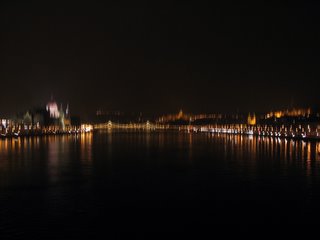
Budapest at night - Parliament on the left.

Woke up to snow on Saturday morning - ironically the warmest day so far at 6 degrees during the day! Went on a city tour courtesy of the workshop organisers in the morning.

Heroes square - celebrating 1000 years of the Hungarian nation.

The largest open air ice rink in Europe - after my experience in NY, didn't even consider trying out again.
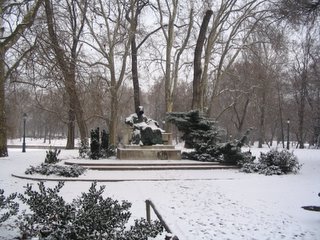
Anonymous - yes that's his name

St. Peters Basilica - the most beautiful church I have visited - even if you consider the Notre Dame and the Sacre Coeur
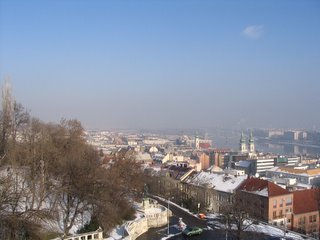
View from the Fisherman's Bastion - one of the towers of the old Buda walls.

A mythical bird that guided the Hungarian tribes from the Ural mountains

Sculpture fountain at the Buda castle
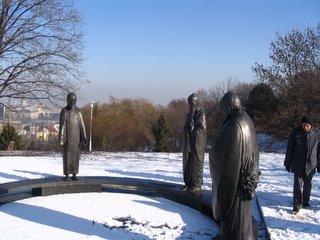
Philosopher's Garden featuring 8 philosophers including Jesus, Budha, Mahatma Gandhi amongst others

Buda (left) and Pest (right) from the Philosopher's Garden

The statue park - one of the most interesting concepts in Budapest - a good collection of Soviet era statues including Lenin, Stalin and Marx.
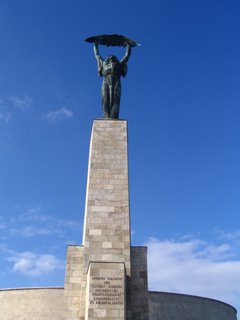
Freedom Statue towers over Buda from the Citadel - an old fortress.

Statue of St. Gellert faces the Elizabeth bridge - one of the most impressive bridges over the Danube. Features a natural waterfall below the statue.

Hibernating bat in a cave. The bat is about 6 cm in length.
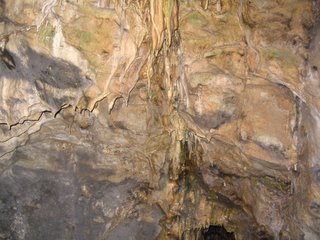
The only known occurrence of green stalactite

Snowing outside the cave
Friday morning, I found out that one of the workshop attendees, Martin Springer was planning on visiting a few sites around Budapest before flying back. So I decided to join him - and it turned out quite interesting towards the end.

We started off at the "Millennium Palace of Arts" - a large complex of theatres, opera halls and the Ludwig Museum of Modern Art. In most cases, modern art does not really do anything for me as I find most of it a load of pretentious bullshit - but there are some pieces that does make one think - like the stuffed pig watching a TV show featuring the butchering of a pig, or the anti apartheid piece featuring the Durban July. There were a few Picassos (didn't think they were great) and a few Warhols (found them better than the Picassos but still nothing great) but my favorite was the work titled "Play it by Trust".


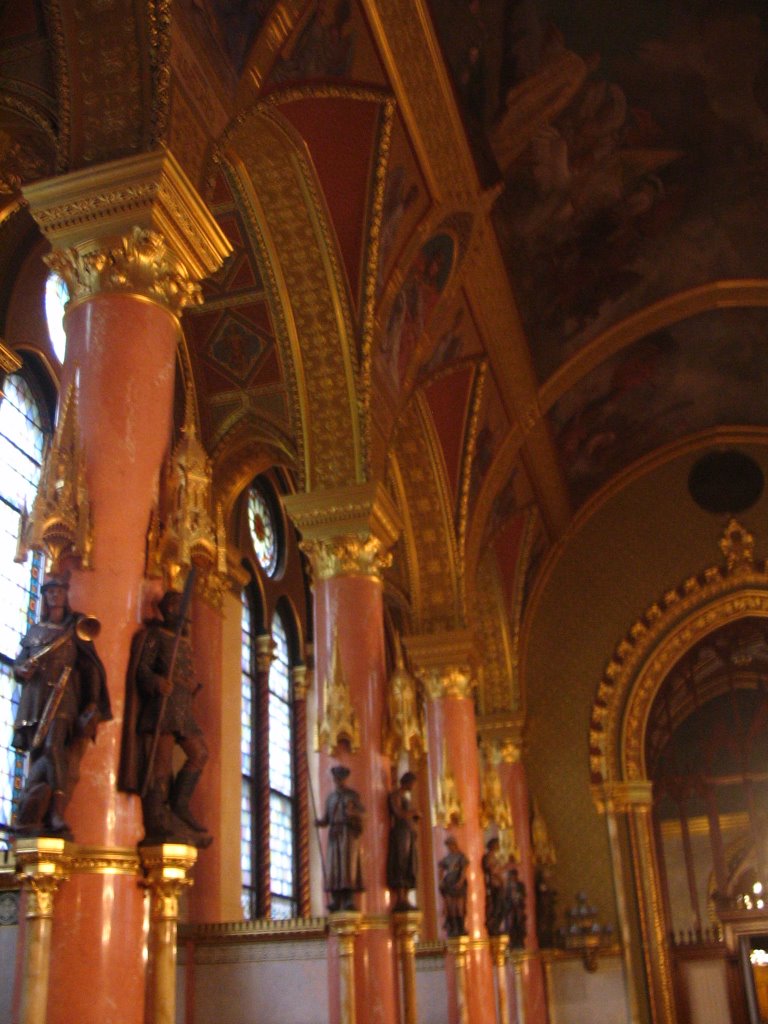
We then went to visit the Hungarian parliament - one of the most impressive buildings in Budapest (via a few detours). The interior is amazing featuring gold plated artwork and one of the oldest surviving crown jewels.
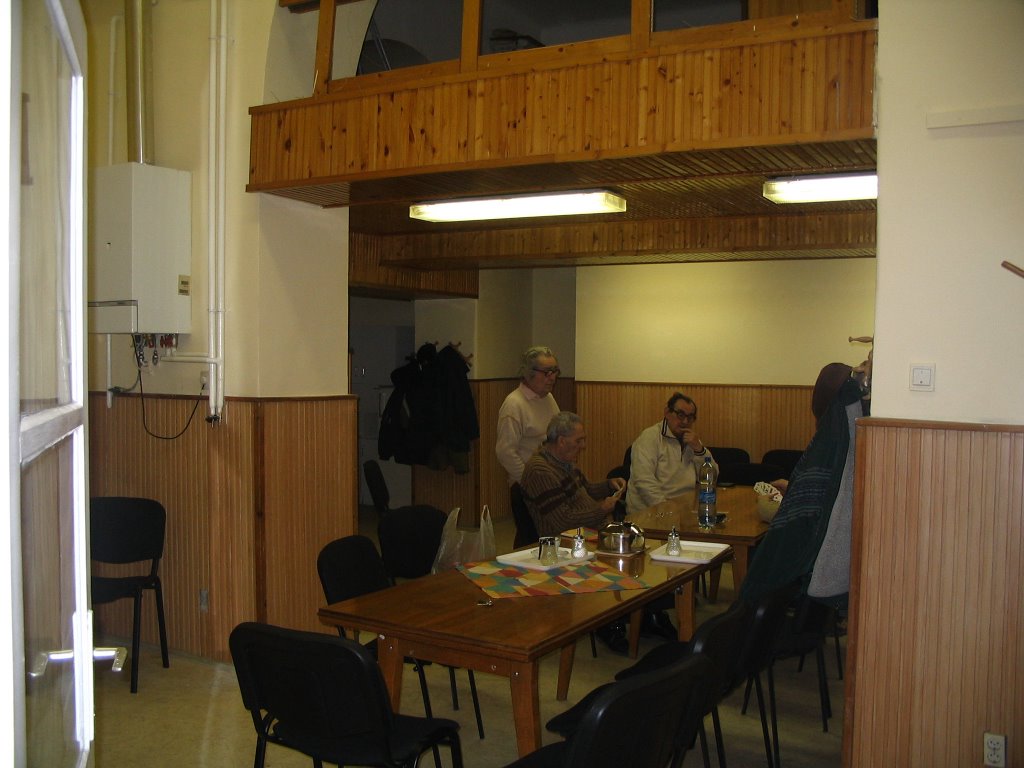
We had a light lunch at the the central market - one of the old style markets - and then while walking back to the hotel, we came across the district headquarters of the socialist party - the remnants of the communist party that once ruled Hungary. We were invited inside by the office manager (who happened to be outside) and we found a few old men playing cards ... a far cry from the old days I think. After Martin left for the airport - I decided to try out one of the many thermal baths in Budapest (and a 70 degree sauna). While it was an interesting experience, I can't really say it was the most amazing thing I have ever experienced.

Budapest at night - Parliament on the left.

Woke up to snow on Saturday morning - ironically the warmest day so far at 6 degrees during the day! Went on a city tour courtesy of the workshop organisers in the morning.
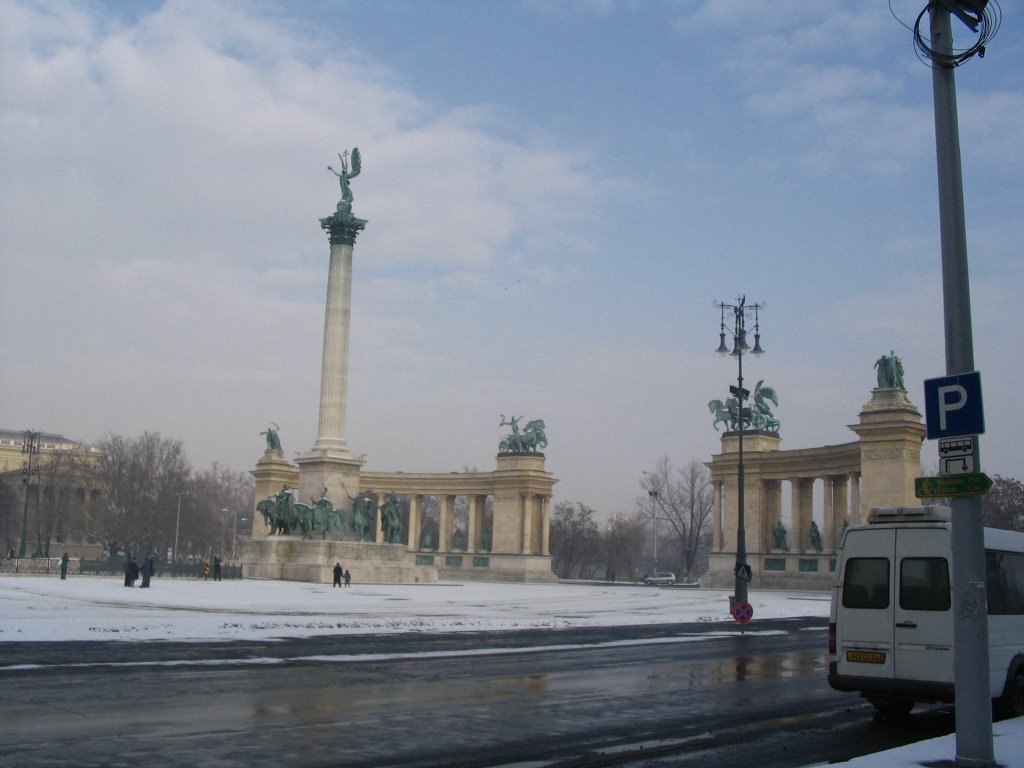
Heroes square - celebrating 1000 years of the Hungarian nation.
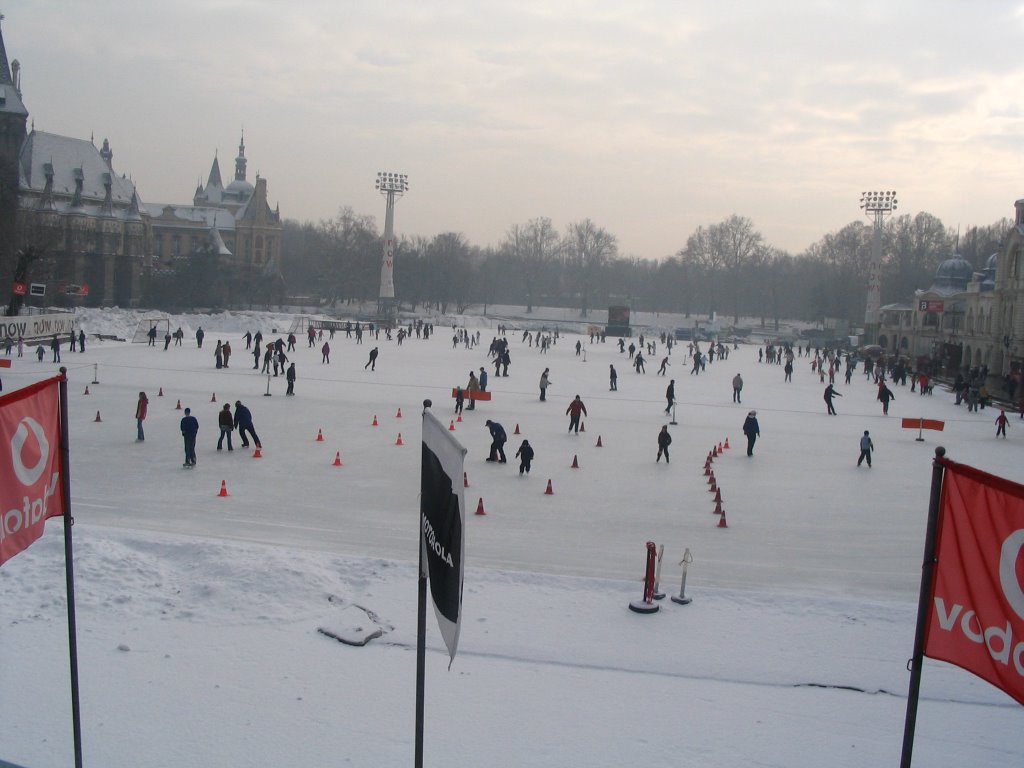
The largest open air ice rink in Europe - after my experience in NY, didn't even consider trying out again.

Anonymous - yes that's his name

St. Peters Basilica - the most beautiful church I have visited - even if you consider the Notre Dame and the Sacre Coeur

View from the Fisherman's Bastion - one of the towers of the old Buda walls.

A mythical bird that guided the Hungarian tribes from the Ural mountains
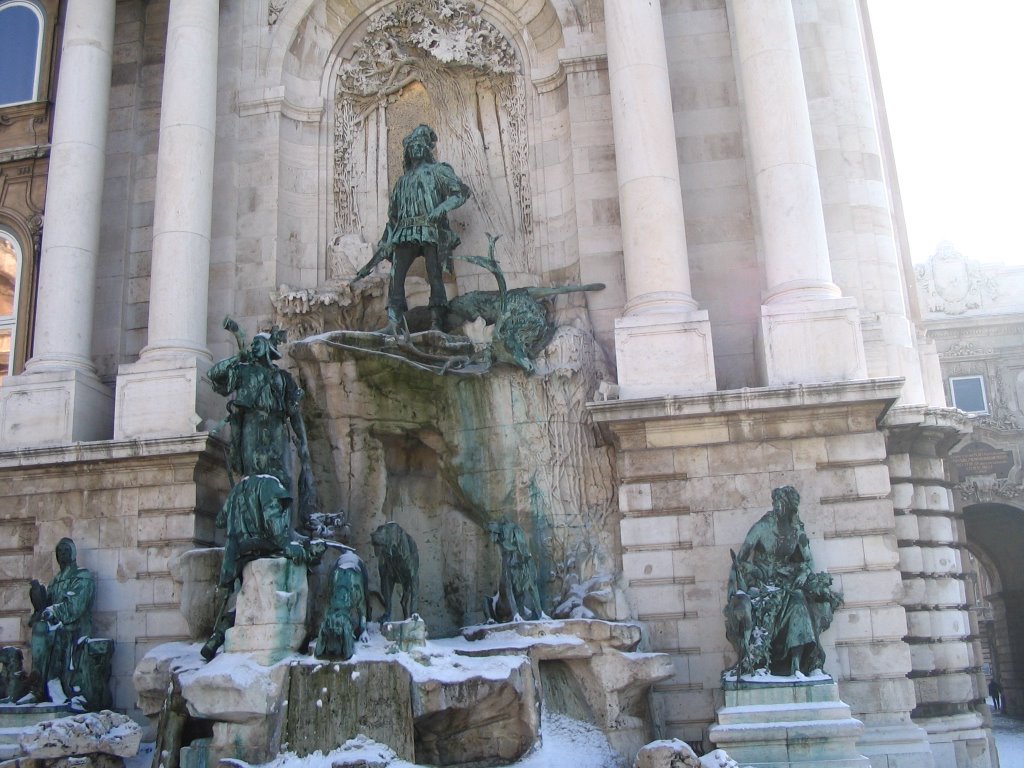
Sculpture fountain at the Buda castle
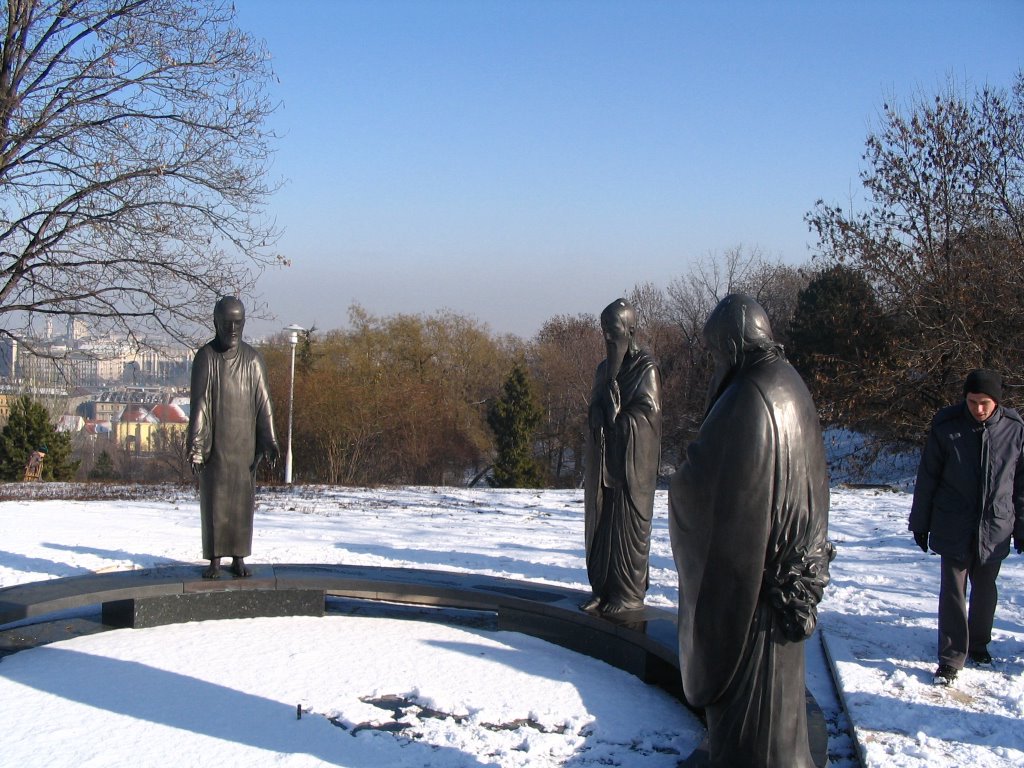
Philosopher's Garden featuring 8 philosophers including Jesus, Budha, Mahatma Gandhi amongst others
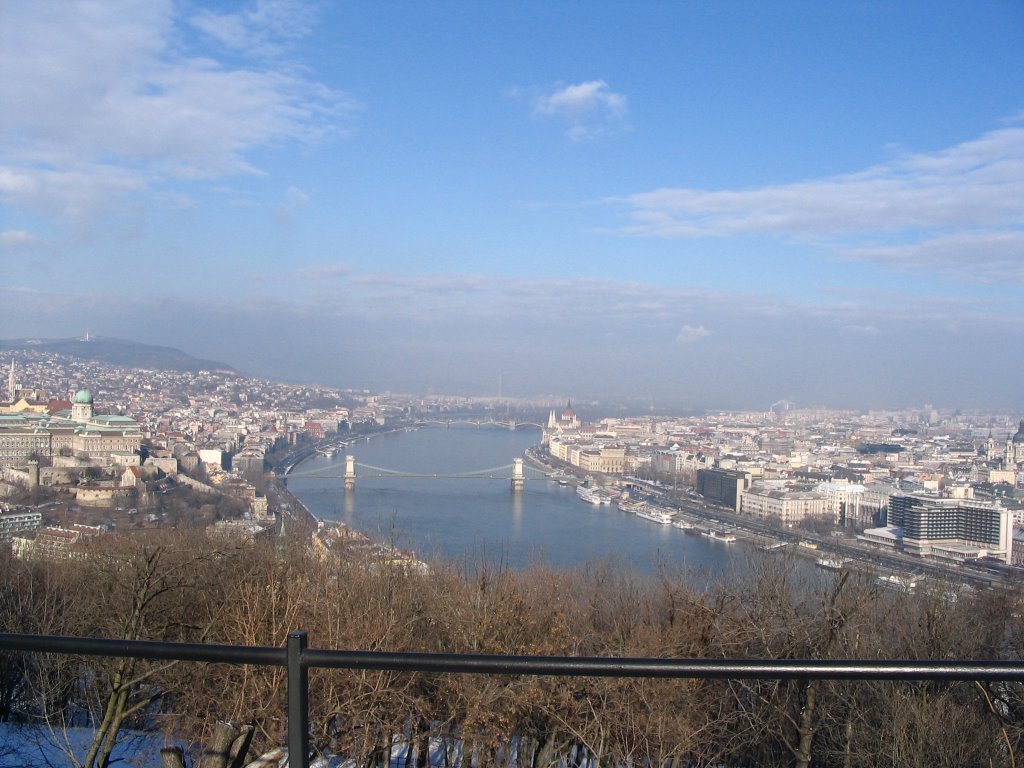
Buda (left) and Pest (right) from the Philosopher's Garden

The statue park - one of the most interesting concepts in Budapest - a good collection of Soviet era statues including Lenin, Stalin and Marx.

Freedom Statue towers over Buda from the Citadel - an old fortress.

Statue of St. Gellert faces the Elizabeth bridge - one of the most impressive bridges over the Danube. Features a natural waterfall below the statue.
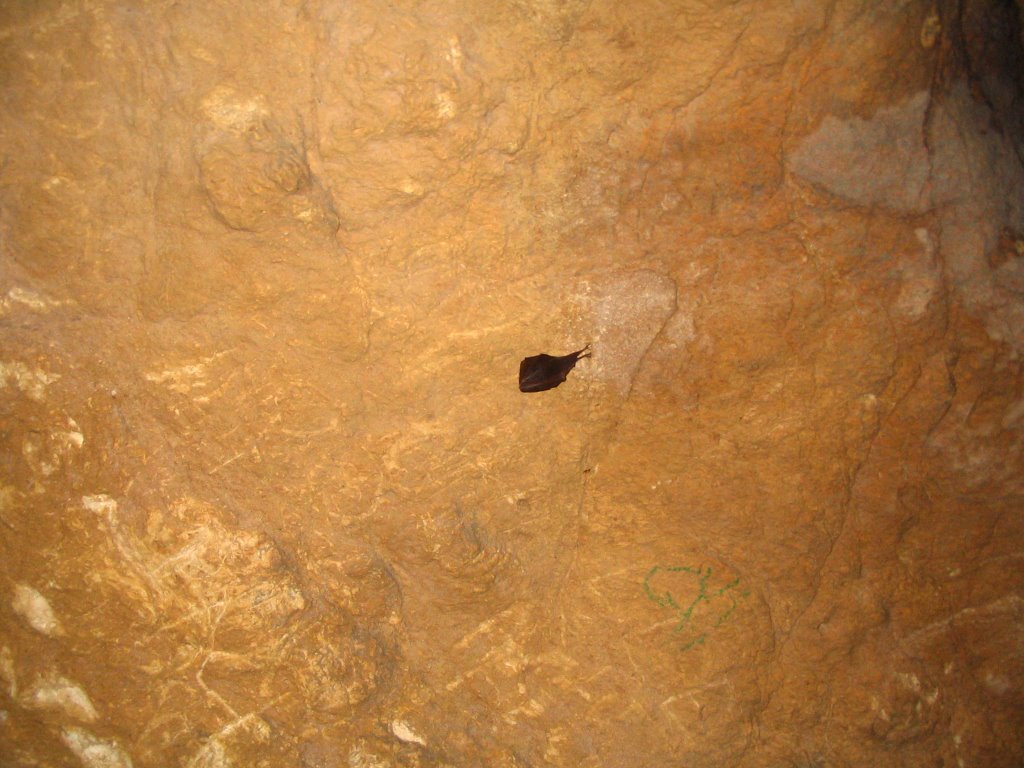
Hibernating bat in a cave. The bat is about 6 cm in length.
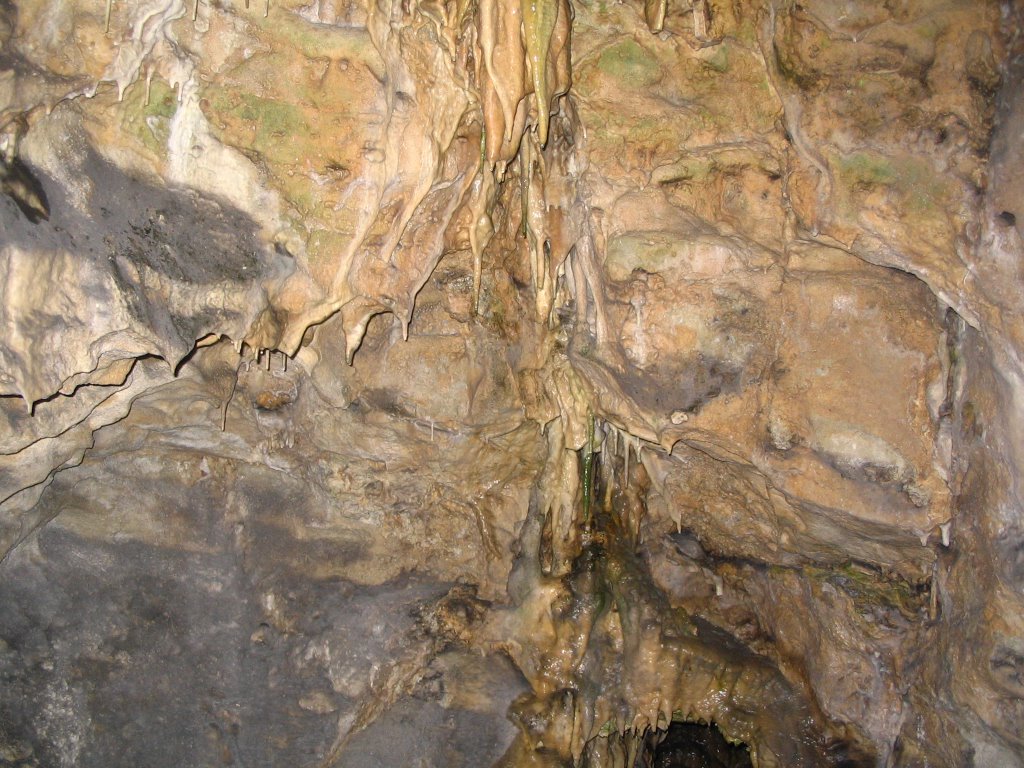
The only known occurrence of green stalactite

Snowing outside the cave
20 January 2006
5th INDICARE Workshop
So yesterday, I was the first speaker at the 5th Indicare workshop. Unlike the other workshops/conferences I have been to - this was a different experience; and was quite refreshing in some ways. This was not an academic conference but was much more of an interaction session between academics, industry, consumer organisations and specialist groups. The format was a bit similar to panel discussions - 2 or 3 presenters gave a 20-30 minute presentation which was then followed by a panel discussion of about 15 minutes.
But the best part was the interaction with the consumer organisations and specialist groups - interaction that is not present at academic conferences. For example, there were two presentations from blind associations (one from Hungary, another from England). In most cases, software developers completely ignore disabled people during their designs - and even though computers can help empower the disabled and let them overcome much of their disabilities, much of the software lets them down. A very positive feedback in this regard, is that one of my key contributions to the field - negotiations - can be an effective solution to much of the problems posed by accessibility.
I also had a chance to talk to Martin Springer from DMP - a sort of rival project to my PhD project. We had some very long chats, and on many different aspects of DRM and computer security in general - I think this was probably the most useful part of the trip.
So a valuable trip overall - and many thanks to INDICARE for inviting me and for funding the trip!
But the best part was the interaction with the consumer organisations and specialist groups - interaction that is not present at academic conferences. For example, there were two presentations from blind associations (one from Hungary, another from England). In most cases, software developers completely ignore disabled people during their designs - and even though computers can help empower the disabled and let them overcome much of their disabilities, much of the software lets them down. A very positive feedback in this regard, is that one of my key contributions to the field - negotiations - can be an effective solution to much of the problems posed by accessibility.
I also had a chance to talk to Martin Springer from DMP - a sort of rival project to my PhD project. We had some very long chats, and on many different aspects of DRM and computer security in general - I think this was probably the most useful part of the trip.
So a valuable trip overall - and many thanks to INDICARE for inviting me and for funding the trip!
Subscribe to:
Posts (Atom)